Court docket is one of the most important tools used within the judicial system. It functions as an official record that tracks every action taken in a legal case, starting from the initial filing through to its final resolution. These records help ensure transparency, accountability, and efficiency by offering a clear timeline of case activity. For attorneys, journalists, researchers, and members of the public, understanding how this system works is essential for navigating court procedures effectively.
In modern courts, case information is increasingly maintained in digital formats and made available through online portals. This shift has transformed the way legal data is stored, accessed, and reviewed. Digital systems allow users to monitor case progress more easily, search records quickly, and stay informed without visiting the courthouse in person. As a result, tracking legal proceedings has become more accessible and efficient than ever before.
What Is a Court Docket?
A court docket is an official chronological summary of all actions related to a legal case. It includes filings, motions, hearings, court orders, and final decisions. Each case is assigned a unique docket number, which acts as an identifier and helps users locate and follow the case accurately.
While the docket usually does not contain full legal documents, it provides brief descriptions and references to each action taken. By reviewing a case file summary, users can quickly understand the procedural history, key developments, and the current status of a case.
Purpose of a Court Docket
The primary purpose of a report is to maintain order and organization within the judicial system. Courts handle thousands of cases simultaneously, and dockets help ensure that no case is overlooked.
Key purposes include:
- Tracking procedural steps in a case
- Scheduling hearings and deadlines
- Providing transparency to the public
- Supporting legal research and analysis
- Assisting judges and court staff in case management
Court dockets also help ensure fairness by documenting every action taken, reducing the risk of procedural errors or disputes.
History of Court Dockets
Court dockets have existed for centuries, originally maintained as handwritten ledgers. Clerks recorded case filings, rulings, and hearing dates manually. As court systems expanded, docketing became more structured and standardized.
With the rise of computers and digital recordkeeping, paper dockets gradually transitioned into electronic docket systems. Today, most courts rely on case management software that automatically updates dockets in real time.
Information Included in a Court Docket
A typical court docket contains a wide range of information, including:
- Case number and docket number
- Court name and jurisdiction
- Names of plaintiffs and defendants
- Attorneys of record
- Case type and classification
- Filing date and case initiation details
- Motions filed by either party
- Court orders and rulings
- Hearing, trial, and conference dates
- Current case status (open, closed, pending, dismissed)
This information provides a comprehensive overview of the case without requiring access to confidential documents.
Types of Court Dockets
Civil Court Record
Civil court dockets record non-criminal disputes between individuals, businesses, or government entities. Common civil cases include contract disputes, property claims, personal injury lawsuits, and landlord-tenant matters.
Civil dockets help parties track deadlines, motions, and settlement activity.
Criminal Court Docket
Criminal court dockets document cases involving alleged violations of criminal law. These dockets include charges, arraignments, bail hearings, trials, and sentencing.
Criminal dockets are particularly important for ensuring due process and public safety.
Family Court Docket
Family case time line focus on domestic matters such as divorce, child custody, child support, and adoption. Due to privacy concerns, some family court docket details may be restricted.
Probate Court Docket
Probate dockets track cases involving wills, estates, guardianships, and conservatorships. These dockets help manage the legal distribution of assets.
Appellate Court Docket
Appellate dockets record appeals filed against lower court decisions. They include briefs, oral arguments, and appellate rulings.
Court Docket Numbers Explained
Each court docket is assigned a unique docket number. This number often includes information such as:
- The year the case was filed
- Court or jurisdiction code
- Case sequence number
Understanding docket numbers allows users to search records efficiently and avoid confusion between similar cases.
How Court Dockets Are Created
Court dockets are created when a case is officially filed with the court. The court clerk assigns a docket number and begins recording all case-related activity.
Every motion, filing, or court order generates a docket entry. Clerks are responsible for ensuring accuracy and timely updates.
Role of Court Clerks in Docket Management
Court clerks play a vital role in maintaining court dockets. Their responsibilities include:
- Entering filings into the docket system
- Updating hearing schedules
- Ensuring compliance with court procedures
- Managing public access to records
Accurate docket management ensures the smooth operation of the judicial system.
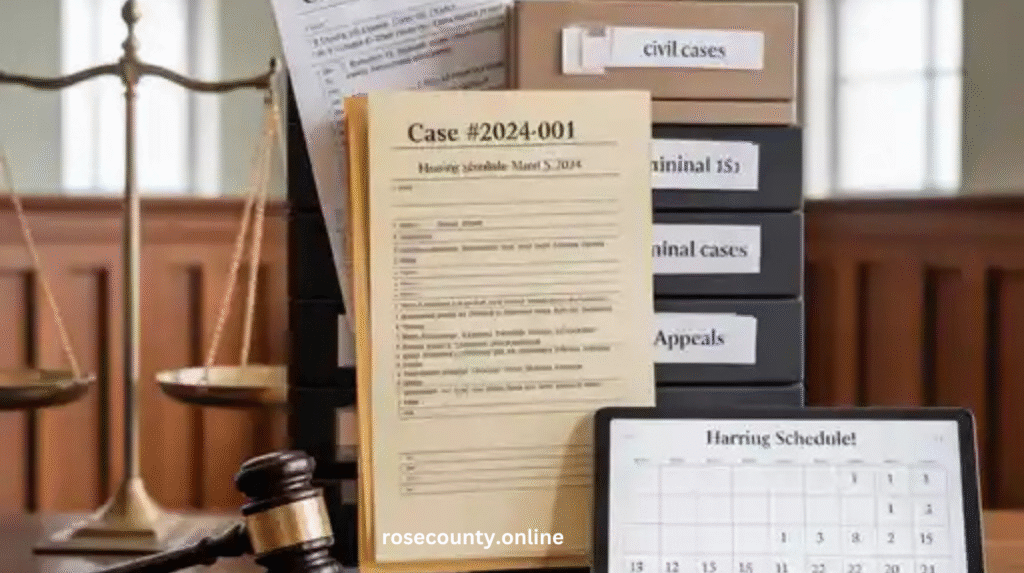
How to Search a Court Docket Online
Most courts now provide online docket search tools. These systems allow users to search by:
- Case number
- Party name
- Attorney name
- Filing date
Online access saves time and reduces the need for in-person court visits.
Benefits of Online Court Docket Systems
Digital case dockets systems offer several advantages:
- Faster access to case information
- Reduced paperwork and storage costs
- Improved accuracy and security
- Greater transparency and public trust
These systems are especially valuable for legal professionals handling multiple cases.
Public Access and Privacy Considerations
While most court records are public records, certain information may be restricted to protect privacy. Examples include:
- Juvenile cases
- Sealed criminal records
- Sensitive family law matters
Courts balance transparency with privacy to maintain fairness and legal compliance.
Court Docket vs. Case File
A court docket is different from a case file. The docket provides a summary of events, while the case file contains full legal documents, evidence, and transcripts.
Understanding this distinction helps users know what information to expect when accessing records.
Importance of Court Dockets for Lawyers
Lawyers rely heavily on court dockets to:
- Monitor filing deadlines
- Prepare for hearings
- Track opposing party activity
- Avoid procedural errors
Accurate docket review is critical to effective legal representation.
Importance of Court Dockets for the Public
For the public, judicial dockets promote transparency and accountability. Citizens can:
- Monitor high-profile cases
- Verify legal proceedingsConduct background research
- This access strengthens confidence in the justice system.
Court Dockets in Government and County Websites
Many county and government websites provide court docket access as part of public service initiatives. These platforms help residents obtain reliable legal information without intermediaries.
Common Challenges in Court Docket Management
Despite technological advances, courts still face challenges such as:
- Data entry errors
- System compatibility issues
- Privacy concerns
- High case volumes
Continuous system improvement is necessary to address these challenges.
Future of Court Dockets
The future of court dockets lies in advanced digital solutions, including:
- Automated case tracking
- Artificial intelligence for data analysis
- Improved public access tools
- Integration across court systems
These innovations aim to improve efficiency and transparency.
Best Practices for Using Court Dockets
To use court dockets effectively:
- Verify information with official sources
- Check updates regularly
- Understand court terminology
- Respect privacy limitations
These practices help users avoid misinterpretation.
Conclusion
Court dockets are a foundational element of the judicial system. They provide structure, transparency, and accessibility to legal proceedings. From tracking case progress to supporting legal research, court dockets serve professionals and the public alike. As courts continue to modernize, digital docket systems will play an even greater role in ensuring efficient and transparent justice.
Understanding case register empowers individuals to navigate legal processes confidently and responsibly.

Frequently Asked Questions (FAQs) – Court Dockets
1. What are court dockets?
Court dockets are official court records that list all actions, filings, hearings, and decisions related to a legal case in chronological order.
2. Why are court dockets important?
Court dockets are important because they help track case progress, ensure transparency, and allow public access to legal proceedings.
3. Are court dockets public records?
Yes, most court dockets are public records. However, some cases such as juvenile or sensitive family matters may have restricted access.
4. How can I search court dockets online?
You can search court dockets by visiting an official court or county website and using the case number or party name in the docket search tool.
5. What information is included in a court docket?
A court docket usually includes the case number, parties involved, filing dates, motions orders, hearing dates, and current case status.
6. What is the difference between a court docket and a case file?
A court docket provides a summary of case activity, while a case file contains complete legal documents, evidence, and transcripts.
7. Can court dockets show the final case outcome?
Yes, court dockets typically show whether a case was dismissed, resolved, or decided by judgment.
8. Are court dockets available for criminal cases?
Yes, court dockets are available for criminal cases, but access to certain details may be limited for privacy or legal reasons.
9. How often are court dockets updated?
Court dockets are usually updated whenever a new filing, motion, or court order is recorded by the court clerk.
10. Can I access court dockets without visiting the courthouse?
Yes, many courts offer online docket access, allowing users to view case information remotely through official court websites.