Introduction
The Rose County court system plays a vital role in maintaining justice and transparency within the community. At the center of this system is the Rose County Clerk of Court case search platform, managed by the Clerk of Court’s office. This office acts as the official custodian of all court records and provides essential public services. In today’s digital age, the Rose County Clerk of Court case search system allows citizens to easily access records related to traffic violations, criminal cases, and civil proceedings online.
Understanding how to use the Rose County Clerk of Court case search system is important for many reasons. Whether you’re conducting a background check, researching legal cases, monitoring a personal matter, or exercising your right to access public records, this tool is highly valuable. The Rose County Clerk of Court case search platform simplifies the process, helping users quickly find accurate and updated information.
This guide will help you navigate the Rose County Clerk of Court case search system effectively, ensuring you can access traffic, criminal, and civil records without confusion while saving time and effort.
Rose County Clerk of Court Overview
The Clerk of Court serves as the official record keeper for all court proceedings in Rose County. The Rose County Clerk of Court case search system is an essential tool that allows the office to manage and provide access to these records efficiently. This office maintains comprehensive documentation of every case filed within the county’s jurisdiction, from minor traffic violations to major criminal prosecutions and complex civil litigation. Through the Rose County Clerk of Court case search, users can easily find and review these records online.
The responsibilities of the Clerk extend beyond simple record-keeping. The office also manages court finances, issues legal documents, administers oaths, and supports judges and court staff. Many of these services are now integrated with the Rose County Clerk of Court case search platform, making it easier for the public to access important case-related information without visiting the courthouse.
The Rose County Clerk of Court office typically operates during standard business hours, Monday through Friday, with specific holiday closures based on the county schedule. While the main office is located in the Rose County Courthouse, the Rose County Clerk of Court case search system ensures that many services are accessible online at any time. Contact details, including phone numbers, email addresses, and office locations, are available on the official county website.
The jurisdiction of the Rose County Clerk of Court includes all cases filed within the county boundaries. This covers multiple court divisions such as circuit court, district court, traffic court, and family court. By using the Rose County Clerk of Court case search, individuals can quickly navigate records across these divisions and access accurate, up-to-date legal information.
Types of Records Available
Traffic Records
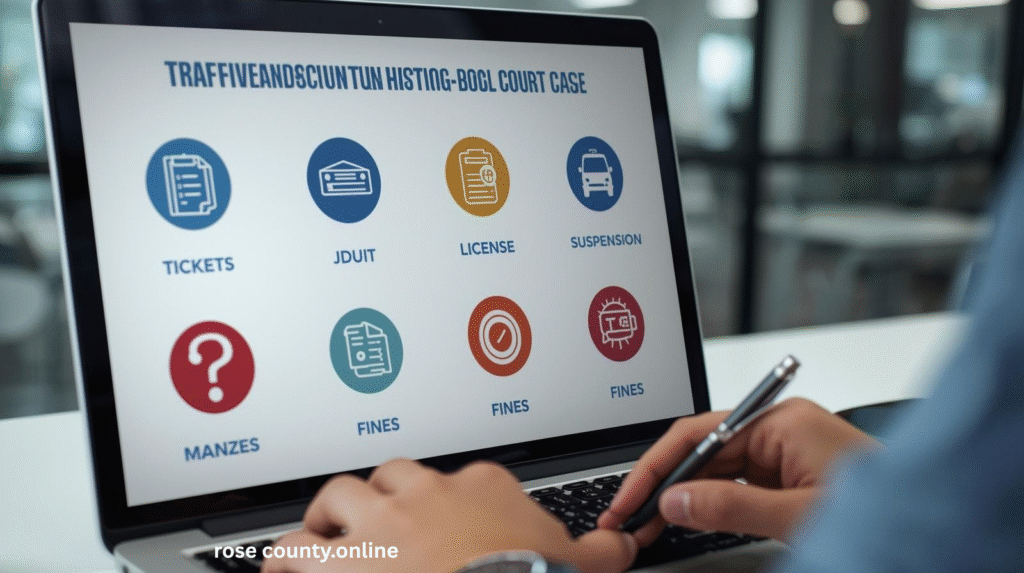
Traffic records are among the most frequently accessed categories in the Rose County court system. Using the Rose County Clerk of Court case search, individuals can find detailed documentation of various traffic-related offenses and proceedings. Common traffic violations included in these records are speeding tickets, running red lights or stop signs, illegal turns, expired registration, driving without insurance, and other moving violations.
More serious traffic offenses, such as DUI (Driving Under the Influence) and DWI (Driving While Intoxicated), are also documented through the Rose County Clerk of Court case search system, given their potential to cause harm. Additionally, license suspension hearings—whether due to points accumulation, serious violations, or failure to pay fines—are tracked in the traffic court records accessible via the case search tool.
Traffic records obtained through the Rose County Clerk of Court case search typically include the citation number, date and location of the violation, officer information, court appearance dates, case disposition (guilty, not guilty, dismissed), fines assessed, and any points added to the driver’s license. These records are valuable for individuals reviewing their driving history, insurance companies assessing risk, and employers hiring drivers. By utilizing the Rose County Clerk of Court case search, users can quickly access accurate traffic record information online without visiting the courthouse.
Criminal Records
Criminal records represent one of the most sensitive and frequently accessed categories of court documents. Using the Rose County Clerk of Court case search, individuals can access detailed documentation of criminal proceedings, ranging from minor misdemeanors to serious felonies. The Rose County Clerk of Court case search system ensures that all criminal cases processed through the county’s judicial system are accurately maintained and publicly accessible where permitted.
Felony cases, involving the most serious crimes such as murder, robbery, sexual assault, and major drug offenses, are meticulously documented through the Rose County Clerk of Court case search, including charging documents, evidence lists, trial transcripts, and sentencing orders. Misdemeanor cases—covering offenses like petty theft, simple assault, disorderly conduct, and minor drug possession—are also recorded, though usually with less extensive files.
Criminal records accessible via the Rose County Clerk of Court case search include arrest records detailing when and why individuals were taken into custody, warrant information including active and bench warrants, court proceedings from arraignment through sentencing, probation records showing terms and compliance, and information about expungement or sealing of records where applicable.
These records serve a variety of purposes, from employment background checks to personal safety research, legal studies, and journalistic investigation. By using the Rose County Clerk of Court case search, users can ensure they obtain accurate, up-to-date criminal record information while respecting access restrictions for juveniles, ongoing investigations, or expunged offenses.
Civil Records
Civil records cover a wide range of non-criminal legal matters where individuals, businesses, or organizations seek resolution through the court system. The Rose County Clerk of Court case search allows public access to comprehensive files on all civil litigation filed within the county. By using the case search, citizens can efficiently find information on civil disputes without needing to visit the courthouse in person.
Civil lawsuits accessed through the Rose County Clerk of Court case search include breach of contract disputes, personal injury claims, property damage cases, and business disagreements. Small claims court cases, which handle disputes involving smaller monetary amounts, are also documented and accessible via the Rose County Clerk of Court case search, providing a simplified process for resolving minor financial disagreements.
Family law matters make up a significant portion of civil records. These include divorce proceedings with documentation of asset division and custody arrangements, child custody and visitation cases, child support enforcement actions, adoption records (sometimes restricted), and domestic violence protective orders—all searchable through the Rose County Clerk of Court case search system.
Other civil records accessible via the Rose County Clerk of Court case search include eviction proceedings, property disputes such as boundary disagreements or title issues, judgment liens for unpaid debts, and probate cases handling estates and guardianships. Civil records typically list the parties involved (plaintiff and defendant), nature of the dispute, attorney representation, court filings and motions, hearing and trial dates, judgments, and monetary awards or settlements.
How to Perform Rose County Case Search
Online Search Methods
The digital revolution has transformed access to court records, making information that once required hours of in-person research available instantly from any computer or smartphone. The Rose County Clerk of Court case search provides several online access points for residents and professionals seeking case information.
The official Rose County Clerk website is the most direct and authoritative source for case data. Through the Rose County Clerk of Court case search, users can find up-to-date records on traffic violations, criminal cases, civil litigation, and family law matters. This portal is maintained by the court system itself, ensuring accuracy and timeliness.
In addition, some statewide portals aggregate data from multiple counties, including Rose County, offering a single interface for broader case research. The Rose County Clerk of Court case search system often integrates with these platforms, making searches more comprehensive.
Third-party public record websites are also popular tools, though it is important to verify information via the Rose County Clerk of Court case search. While these services may provide user-friendly interfaces, alerts, and other features, they may charge fees and might not always reflect the latest records.
Some jurisdictions offer mobile applications for convenient access to court records, including notifications of court dates and case updates. Checking whether Rose County supports such an app can further enhance the convenience of the Rose County Clerk of Court case search for frequent users.
Search Criteria Options
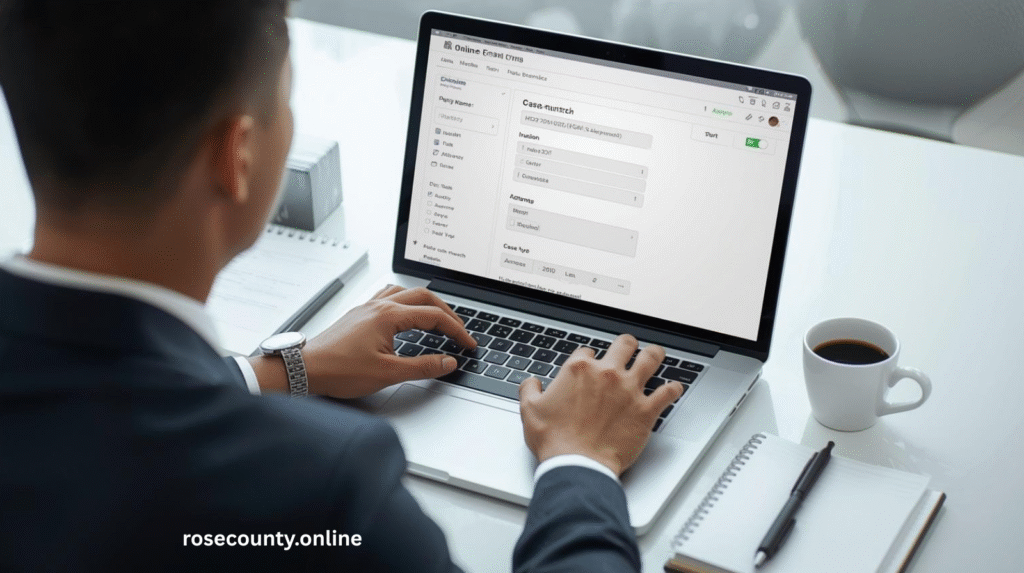
Effective case searching requires understanding the various ways information can be retrieved through the Rose County Clerk of Court case search system. This system provides multiple search parameters to help users locate the specific records they need quickly and efficiently.
Case number searches are the most direct method when you know the unique identifier assigned to a case. Every case filed in Rose County receives a permanent case number, and using the Rose County Clerk of Court case search with this number typically returns complete and precise results for that matter.
Party name searches allow users to locate cases involving specific individuals or organizations. In criminal cases, this may involve the defendant’s name, while in civil matters, either the plaintiff or defendant can be searched. Using the Rose County Clerk of Court case search, it is recommended to try various name formats—first and last, last and first, with or without middle initials—to ensure accurate results.
Attorney name searches are also available through the Rose County Clerk of Court case search, enabling users to find all cases handled by a particular lawyer or law firm. Date range filters help narrow searches to specific time periods, which is particularly useful for recent or historical case research.
Case type filters within the Rose County Clerk of Court case search system allow users to limit results to categories such as criminal, civil, traffic, family, or probate matters. These filters make it easier to focus on the exact type of case being researched and enhance overall search efficiency.
Step-by-Step Search Guide
Accessing the Rose County Clerk of Court case search system is generally straightforward, though steps may vary slightly depending on the platform used. Start by visiting the official Rose County Clerk of Court website or the designated case search portal, and look for links labeled “Case Search,” “Court Records,” “Public Access,” or similar terminology.
Once on the search page, the Rose County Clerk of Court case search form will allow you to enter various inputs. Choose your search criteria based on the information available. When searching by name, enter it carefully, paying attention to spelling and formatting. The Rose County Clerk of Court case search system may be case-sensitive or require specific formats for accurate results.
For advanced searches, the Rose County Clerk of Court case search allows combining multiple criteria or using wildcard characters, such as asterisks (*) or question marks (?), to find variations of names or numbers. After submitting your search parameters, wait for the results to load.
Review results carefully, as multiple matches may appear, especially with common names. Use case numbers, filing dates, and case types to identify the correct record. Click individual cases to view detailed information, including parties involved, important dates, case status, and available documents.
The Rose County Clerk of Court case search system also allows viewing or downloading court documents directly from the case detail page. Some documents are free to view, while others may require payment. Be sure to check if you need a simple view or a certified copy, as certified copies generally incur additional fees.
Understanding Search Results
Case Information Displayed
When you access a case through the Rose County Clerk of Court case search system, you’ll find a wealth of information presented in a structured format. Understanding how to read and interpret this data is essential for effectively using court records.
The case number and filing date are prominently displayed in the Rose County Clerk of Court case search results. The case number typically follows a format indicating the year filed, court division, and sequential number, while the filing date shows when the case was officially initiated.
Party information lists all individuals or entities involved. In criminal cases, this includes the defendant and prosecuting authority (e.g., “State of [State] v. [Defendant Name]”). Civil cases display plaintiff and defendant names, sometimes with multiple parties on either side. The Rose County Clerk of Court case search also provides attorney information, including law firm names, individual attorney names, and occasionally contact details, which can help users understand the legal representation for each side.
Charges or claims sections outline the specific legal issues. In criminal cases, this lists each charge with statute citations, while civil cases describe the nature of the dispute and relief sought. Court dates and hearings are listed chronologically, providing a clear timeline of past and upcoming proceedings.
Case status and disposition in the Rose County Clerk of Court case search indicate where a case stands, such as “active,” “pending,” “closed,” or “appealed,” with final outcomes like “guilty,” “dismissed,” “settled,” or “judgment for plaintiff.” For concluded cases, users can find information about fines, penalties, restitution, sentences (for criminal cases), or monetary judgments (for civil cases) directly through the Rose County Clerk of Court case search system.
Document Access
Beyond basic case information, the Rose County Clerk of Court case search system provides access to actual court documents filed in each case. The docket, or register of actions, lists every document submitted and action taken in chronological order, creating a complete timeline that users can review through the Rose County Clerk of Court case search.
Court orders and judgments, accessible via the Rose County Clerk of Court case search, represent the official decisions and rulings issued throughout the case. These documents carry legal weight and often determine the rights and obligations of the parties involved.
Pleadings and motions include documents filed by attorneys, such as complaints, answers, motions to dismiss, motions for summary judgment, and other legal arguments. Reviewing these through the Rose County Clerk of Court case search can provide valuable insight into each side’s legal strategy and the facts they are alleging.
Sentencing documents in criminal cases detail punishments, including incarceration terms, probation conditions, fines, and other penalties. In civil cases, judgment documents specify monetary awards, injunctions, or other relief granted—all of which can be accessed directly through the Rose County Clerk of Court case search system.
Fees and Costs
Understanding the fee structure for accessing Rose County court records helps users budget appropriately and choose the most cost-effective access method. Fee structures vary significantly between jurisdictions and even between different types of records within the same jurisdiction.
Many Rose County case search systems offer free basic searching, allowing users to search for cases and view summary information without charge. However, accessing full documents or obtaining certified copies typically incurs fees. Online viewing of documents might be free or involve small per-page charges, while downloading or printing may cost more.
Certified copies, which include an official seal and certification of authenticity, are necessary for many legal purposes and generally cost significantly more than regular copies. The certification fee covers the clerk’s time in verifying the document’s authenticity and applying the official seal.
Payment methods for online services typically include credit cards and debit cards, while in-person payments may also accept cash, checks, and sometimes money orders. Some jurisdictions are beginning to accept digital payment platforms as well.
Fee waivers may be available for indigent parties or in specific circumstances such as for parties to the case, attorneys of record, or government agencies. Requirements for fee waivers vary and typically require documentation of financial hardship.
Privacy and Public Records
Public vs. Confidential Records
While court proceedings generally operate under a presumption of public access, not all court records are available to everyone. Understanding which records are public and which are confidential helps set appropriate expectations when conducting searches.
Most criminal and civil cases are matters of public record, meaning anyone can access the information. This transparency serves important democratic functions, allowing oversight of the judicial system and enabling informed decision-making by citizens.
However, certain categories of cases or information within cases are sealed or restricted. Juvenile criminal cases are typically confidential to protect minors, though serious offenses may result in cases being transferred to adult court where records become public.
Cases involving mental health commitments, adoption proceedings, certain family law matters involving children, and cases where a court has specifically ordered records sealed for cause are generally not accessible through public search systems.
Expunged records are those that have been legally erased or sealed following a court order, typically after an individual successfully completes certain requirements or after a wrongful arrest. Once expunged, these records should not appear in public searches, though law enforcement may retain access.
Even in public cases, certain information may be redacted to protect privacy, such as social security numbers, financial account information, addresses in domestic violence cases, and information about minor children.
Legal Considerations
Users of court record information must be aware of legal restrictions on how such information can be used. The Fair Credit Reporting Act (FCRA) imposes strict requirements on anyone using court records for employment, credit, insurance, or housing decisions. Entities conducting background checks for these purposes must comply with FCRA requirements including obtaining consent, providing notices, and allowing opportunity to dispute inaccurate information.
Privacy laws at both federal and state levels may restrict certain uses of court record information. Simply because information is publicly accessible doesn’t mean it can be used for any purpose without legal consequences.
Proper use of court records includes legitimate research, monitoring of cases you’re involved in, journalistic investigation, academic study, and due diligence in business transactions. Prohibited uses include harassment or stalking, identity theft, discrimination in employment or housing based on protected characteristics, unauthorized commercial data mining, and using information obtained about juveniles in confidential proceedings.
Alternative Access Methods
In-Person Search
Despite the convenience of online access, in-person visits to the Rose County Clerk of Court office remain valuable for certain purposes. Staff can provide assistance with complex searches, access to records not available online, and immediate certified copies.
When visiting in person, bring valid photo identification and any case numbers or specific information you have about the records you’re seeking. Clerk’s office staff can guide you to public access terminals or assist directly with locating records.
Be prepared for potential wait times, especially during busy periods such as mornings and days following holidays. Some offices operate on a first-come, first-served basis while others may use appointment systems.
Copy services are available on-site, typically using coin-operated or card-operated copy machines for regular copies, with certified copies prepared by clerk staff upon request and payment of appropriate fees.
Phone Inquiries
The Rose County Clerk of Court typically accepts phone inquiries for basic case information, though the scope of information available by phone is limited compared to online or in-person access. Staff can generally confirm case numbers, upcoming court dates, case status, and basic party information.
However, detailed case information, document contents, and legal advice are not provided over the phone. Complex searches may require visiting in person or using online systems.
Mail Requests
Written requests for court records can be submitted by mail for those unable to access records online or visit in person. A proper mail request should include specific case identification (case number if known, party names, approximate filing date), description of documents requested, your contact information including return address, and payment for copy fees (check or money order).
Processing time for mail requests typically ranges from several days to several weeks depending on the complexity of the request and the office’s workload. Include a self-addressed stamped envelope if requesting a small number of pages.
FOIA Requests
For records not routinely made available or when seeking information in specific formats, submitting a Freedom of Information Act request may be necessary. FOIA processes vary by jurisdiction but generally require a written request specifying the records sought with reasonable detail.
Response timelines are established by law, though extensions may be granted in cases involving voluminous records or records requiring redaction. Fees may be assessed for search time, copying, and redaction services.
Common Uses of Court Records
Personal Reasons
Individuals access Rose County court records for various personal purposes. Background checks before hiring household employees, entering business partnerships, or developing personal relationships help people make informed decisions.
Pre-employment screening has become standard practice for many jobs, with employers checking for criminal history that might be relevant to job responsibilities. Landlords commonly search civil and criminal records when screening potential tenants, looking for eviction history, civil judgments, or criminal convictions that might indicate risk.
People involved in legal proceedings monitor their own cases through online portals, checking for newly filed documents, upcoming court dates, and case status updates.
Professional Use
Legal professionals extensively use court records for research, finding relevant case precedents, researching opposing counsel’s litigation history, and verifying claims made by parties or witnesses.
Journalists access court records as primary sources for news stories about criminal prosecutions, civil litigation, and matters of public interest. Academic researchers study court records to understand trends in litigation, judicial decision-making, and social issues reflected in legal disputes.
Real estate professionals check for liens, judgments, and pending litigation that might affect property transactions. Business professionals conduct due diligence on potential partners, customers, or vendors by researching litigation history and financial judgments.
Troubleshooting Common Issues
Users sometimes encounter challenges when searching Rose County court records. If search results don’t appear for a case you believe should exist, try alternative name spellings, verify you’re searching the correct jurisdiction, check different time periods, or try searching by case number if available through another source.
Incorrect information in search results should be reported to the Clerk’s office, though understand that the office cannot alter official court records without proper legal proceedings. Access denied errors may result from attempting to view sealed records, technical issues with the website, or records not yet available online due to recent filing.
Availability of old records varies, with some very old cases predating computerization and requiring in-person research in physical archives. Technical problems with websites should be reported to the technical support contact listed on the site, and trying alternative browsers or clearing cache may resolve some issues.
Record Accuracy and Updates
Users should understand that online court records typically update on a regular schedule but may not reflect actions taken within the last 24-48 hours. Court clerks enter information from physical court proceedings and filings into computer systems, a process that involves some time lag.
Disclaimers on court record websites typically state that while every effort is made to ensure accuracy, the official record remains the physical file maintained by the clerk’s office. For matters where precise accuracy is critical, verify information through certified copies or direct consultation with the clerk’s office.
If you discover errors in court records, contact the Clerk’s office to report the discrepancy. Correcting official records requires proper legal procedures, which may involve filing motions with the court.
Additional Resources
Rose County residents have access to various resources beyond the Clerk of Court that can provide assistance with legal matters. Legal aid organizations offer free or low-cost legal services to qualifying low-income individuals for civil matters. Attorney referral services operated by local bar associations can connect people with lawyers practicing in relevant areas of law.
Court self-help centers, available in many jurisdictions, provide information and forms for people representing themselves in legal matters. Staff at these centers can explain procedures and requirements but cannot provide legal advice or represent individuals.
Related county departments such as the sheriff’s office, tax collector, and property appraiser may maintain records relevant to legal matters. State judicial system websites provide information about court procedures, rules, and forms applicable throughout the state.
Tips for Effective Searching
Successfully navigating the Rose County case search system becomes easier with practice and awareness of best practices. Start with the most specific information you have, such as case numbers, which return the most precise results.
When searching by name, try multiple variations including full legal names, names with and without middle initials, common nicknames, and former names or maiden names. Be aware of common mistakes such as assuming all records are online (some older or specialized records may only be available in person), relying solely on third-party websites without verifying through official sources, and forgetting that recently filed cases may not yet appear in online systems.
Multiple search strategies can be necessary for thorough research. If one approach doesn’t yield results, try different combinations of search terms and criteria.
Keep records of your searches including dates searched, search terms used, and results obtained, particularly for matters where you may need to document your research efforts.
For ongoing cases, set up regular check-in schedules to monitor for new filings and court dates. Some systems offer email alerts for case updates, which can be valuable for staying informed.
Conclusion
Access to Rose County Clerk of Court records represents a fundamental component of transparent governance and an informed citizenry. The ability to search traffic, criminal, and civil records online has democratized access to information that once required significant time and effort to obtain. Whether you’re conducting background research, monitoring a legal matter, or exercising your right to oversight of the judicial system, understanding how to effectively use the Rose County case search system empowers you to access the information you need. Remember to use court records responsibly, respecting both legal restrictions and ethical considerations regarding privacy and appropriate use of public information.
Frequently Asked Questions (FAQs)
1. Is the Rose County case search free?
Basic searching and viewing of case information is typically free on official court websites. However, accessing detailed documents, printing, or obtaining certified copies usually involves fees. Third-party websites may charge subscription fees for access.
2. How far back do the available records go?
The availability of historical records varies. Recent cases from the past 10-20 years are generally available online, while older records may require in-person research. Some jurisdictions have digitized older records, but many courts have archives containing only physical files from decades past.
3. What should I do if my search returns no results?
Try alternative spellings of names, verify you’re searching the correct jurisdiction and time period, broaden your search criteria, or contact the Clerk’s office directly for assistance. The case might be sealed, expunged, or filed under different party names than you’re searching.
4. How can I access sealed records?
Sealed records are generally not accessible to the public. You may need to petition the court for access, demonstrate legal standing or legitimate need, or be a party to the case. Attorneys representing parties typically have broader access.
5. How do I correct an error in a court record?
Contact the Rose County Clerk of Court to report the error. Correcting official records typically requires filing a motion with the court requesting the correction, potentially with a hearing before a judge. The clerk’s office can guide you through the proper procedure.
6. Are third-party websites reliable?
Third-party websites aggregate public records from various sources and can be useful for broad searches across multiple jurisdictions. However, they may not have the most current information and can contain errors. Always verify important information through official court sources.
7. How quickly are case statuses updated?
Updates typically occur within 24-48 hours of court actions, though this varies by jurisdiction and the complexity of the update. For the most current information on active cases, particularly regarding same-day hearings or filings, contacting the clerk’s office directly may be necessary.
8. How can I get a criminal record expunged?
Expungement processes vary by state and depend on the nature of the offense, how much time has passed, and whether you’ve completed all sentence requirements. Generally, you must file a petition with the court, possibly attend a hearing, and receive a judge’s order. Consulting with an attorney experienced in expungement is advisable.
9. How do I pay a traffic ticket?
Traffic ticket payment information is typically included on the citation and in the case record. Many jurisdictions offer online payment through the clerk’s website, or you can pay in person or by mail. Be aware of payment deadlines to avoid additional penalties.
10. What is the process for filing a civil case?
Filing a civil case requires preparing a complaint or petition describing your claim, paying filing fees, and submitting documents to the clerk’s office. The clerk’s office or court self-help center can provide forms and basic procedural information, though legal advice requires consulting an attorney.
11. How can I check for warrants?
Active warrants may appear in criminal case searches, though some jurisdictions maintain separate warrant searches. You can also contact the sheriff’s office or local law enforcement. If you discover an active warrant for yourself, consulting an attorney before making contact with law enforcement is advisable.
12. How do I find upcoming court dates?
Court dates appear in the case record under docket entries or upcoming hearings. Online case search systems typically display scheduled court dates. You can also call the clerk’s office to verify hearing times and locations. Parties to cases often receive official notice of court dates by mail.